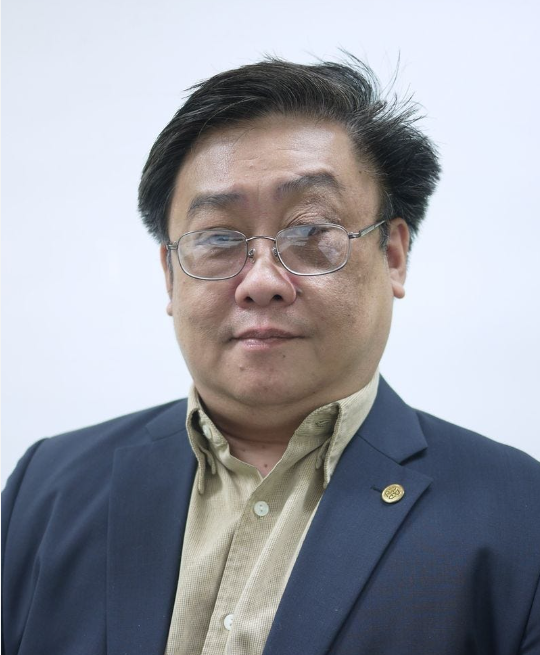
Biography: Eric Tsui is former Associate Director of the Behaviour and Knowledge Engineering (BAKE) Research Centre and currently a Senior Project Fellow at the Educational Research Centre at The Hong Kong Polytechnic University. Between 2015 and 2023, he served as the Managing Regional Editor (Asia) of the Journal of Knowledge Management and led a Master Knowledge Management program for over 15 years. Eric has also championed many technology-enhanced teaching and learning projects and is a crusader of technology-enhanced learning at the university. His research interests include Knowledge Management technologies, blended learning, cloud services, and collaborations. Eric is the leader of two Professional Certificate programs and two Massive Open Online Courses (MOOCs) on edX and has authored several articles in Times Higher Education Campus. He holds B.Sc. (Hons.), PhD, and MBA qualifications. A recipient of many Knowledge Management and E-Learning international awards including the Knowledge Management Award for Excellence in 2021 and the QS Wharton Reimagine Education Gold Award (Asia) in 2015, Professor Tsui was twice listed as an exemplary/outstanding academic in PolyU Annual Reports in the last 8 years.
This talk will summarise recent trends and driving forces behind the advancement and adoption of educational technologies and new pedagogies in higher education. Such technologies include, but not limited to, Artificial Intelligence, Extended Reality (e.g. Augmented/Virtual Reality and the metaverse), and gamification. The non-technical issues that need to be addressed as a result of adopting and leveraging these technologies are even more worthy of discussion e.g. re-design of assessments, AI competencies for teachers and students, and the ethical issues in the use of AI software. Variations in the emphasis and applications of educational technologies between Western and Asian institutions will also be outlined.

Biography: Masami Yoshida is a senior advisor and concurrent researcher at the Thailand Cyber University (TCU) project under the Ministry of Higher Education, Science, Research and Innovation (MHESI) (2023-). Prior to this appointment, he was a full-time faculty member at Chiba University, Japan (2003-2023) as a professor, the Graduate University for Advanced Studies (2001-2003), and Toyama University (1989-1995) as an associate professor. He also held an academic position at the National Institute of Multimedia Education (NIME) from 1995 to 2003. Additionally, he was sent by the Japan International Cooperation Agency (JICA) to provide academic training in Indonesia, Malaysia, Papua New Guinea, and Thailand. His areas of expertise include educational technology, international education, and social network analysis. His representative report is Yoshida, M. Network analysis of gratitude messages in the learning community. Int J Educ Technol High Educ 19, 47 (2022). https://doi.org/10.1186/s41239-022-00352-8
As online education continues to gain traction, it is imperative to investigate how interactions within the learning community contribute to individual competencies. There is a growing trend to apply social network analysis to the learning network to study student development. As a package of computational and statistical methods for analyzing social networks, exponential family random graph models (ERGMs) explore intricate network structures based on the relational data within the network. This scoping review examined articles that employed ERGMs and summarized the analysis of emergent communities. Scopus and ScienceDirect were used for the literature search, resulting in 11 articles that met the inclusion and exclusion criteria. Four categories of data extraction schemes were adopted: bibliometrics, analysis design, network profile, and network structure. The underlying framework observed in online discussions was predominantly mutual, with ease of expansion and subsequent formation of a star structure. However, the presence of a triangle structure did not manifest significantly. Conversely, the connections displayed a strong linkage to the broader network, thus forming a small-world structure. The results hold potential for future educational research that elucidates online learning interactions based on students’ relational data.

Biography: Full-time Professor with a demonstrated history of working in the higher education industry, especially in the field of Informatics. He received his BSEE (Bachelor of Science in Electrical Engineering) from Purdue University, the USA in 1996; MSSE (Master of Software System Engineering) from The University of Melbourne, Australia in 2001; and Doctorate (Computer Science) from Universitas Gadjah Mada, Indonesia in 2012.
His research interests include Open Source Software Technologies, Software Metrics, Software Quality, IT Project Management, Datamining, and Artificial Intelligence.
His managerial skills include being Head of the Informatics Undergraduate Program at Universitas Kristen Maranatha in 2005 - 2008, Head of Research and Community Service (LPPM) at Universitas Kristen Maranatha in 2016 - 2018, Vice Dean 3 (Student Affairs, Alumni, and Cooperation), Vice Dean 1 (Academics, Information System, and Quality Assurance) at Universitas Atma Jaya Yogyakarta. Currently, he is the Deputy Director of Quality System Development, Directorate of Quality Assurance, Universitas Atma Jaya Yogyakarta since October 2023 and Professor since December 2023.
While global advancements in Information Technology (IT) are often designed to address the challenges of developed nations—such as aging populations and high-tech industrial economies—Indonesia faces a unique set of sociocultural and geographic demands. This presentation explores the necessity of "adjusting" IT breakthroughs like Artificial Intelligence, Big Data, and Gamification to align with Indonesian local wisdom and its specific societal needs. Speaker will highlight diverse applications of technology tailored to the Indonesian context, including the use of machine learning for traditional dance preservation, gamification for local language learning and disaster management education, and the development of Enterprise Architecture for village administrations and Small and Medium Enterprises (SMEs). Furthermore, it addresses the critical role of higher education in bridging the regional quality gap between Western and Eastern Indonesia. Advancements in Information Technology can serve as a powerful tool for preserving culture while driving modern societal progress in a vast and diverse country, such as Indonesia.